Daniele Guerrini
@danieleguerrini
21
Following
95
Followers
23
Updates
772
Likes
248
Comments
28
Votes
21 days ago
LUMINA — When Less Becomes More
A small experiment. A significant evolution.
Sometimes, the most important improvements in robotics don't come from adding more motors, sensors, or complex mechanisms.
Sometimes, they come from removing weight.
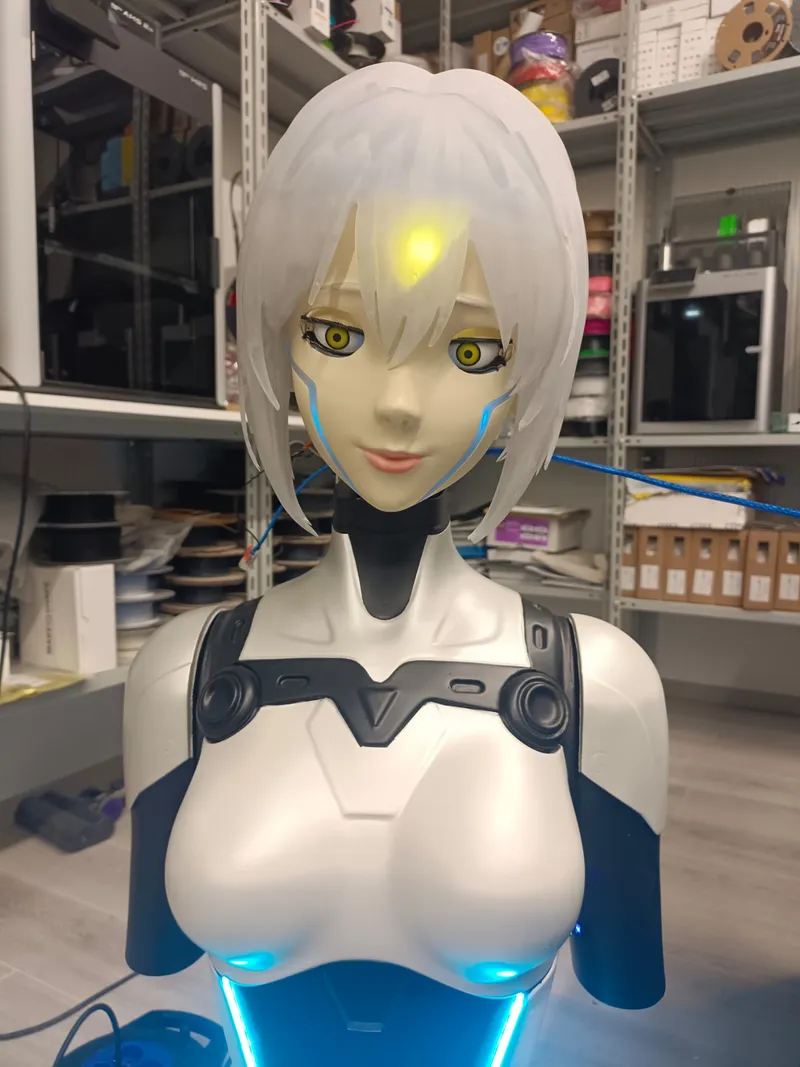
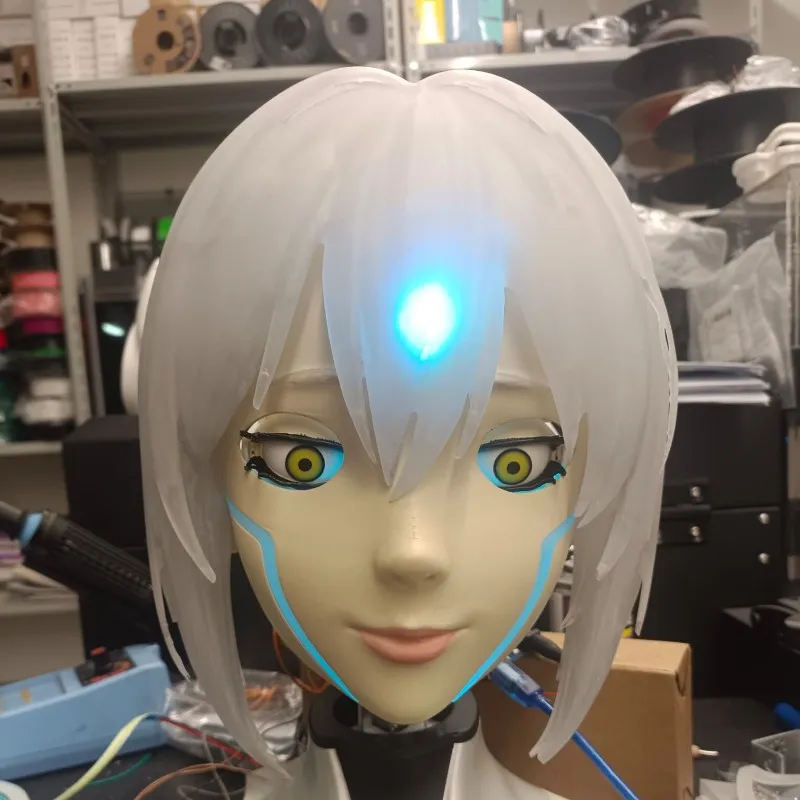
During the development of Lumina, I decided to explore an alternative solution for one of her most distinctive features: her hair.
The original hairstyle was entirely 3D printed in resin, carefully designed to preserve Lumina's futuristic, anime-inspired appearance.
However, this solution presented a significant mechanical challenge.
The resin hair assembly weighed almost 1,000 grams.
That additional mass placed considerable stress on the neck motors, particularly during head rotations and tilting movements.
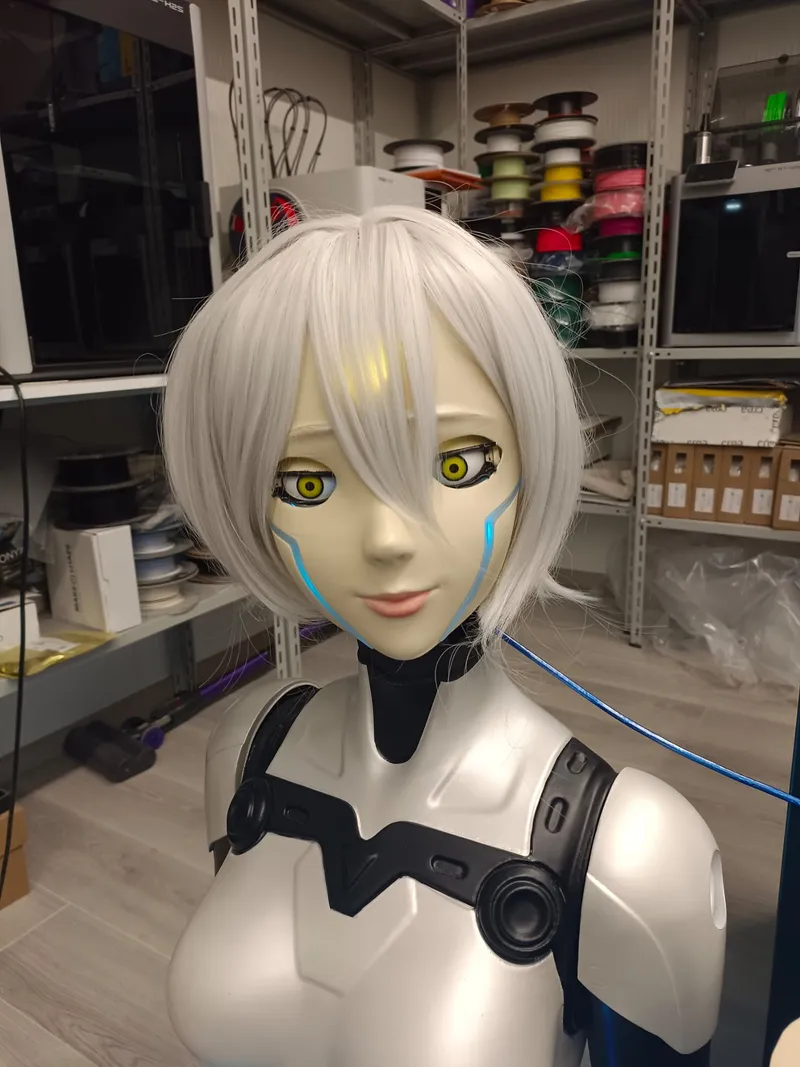
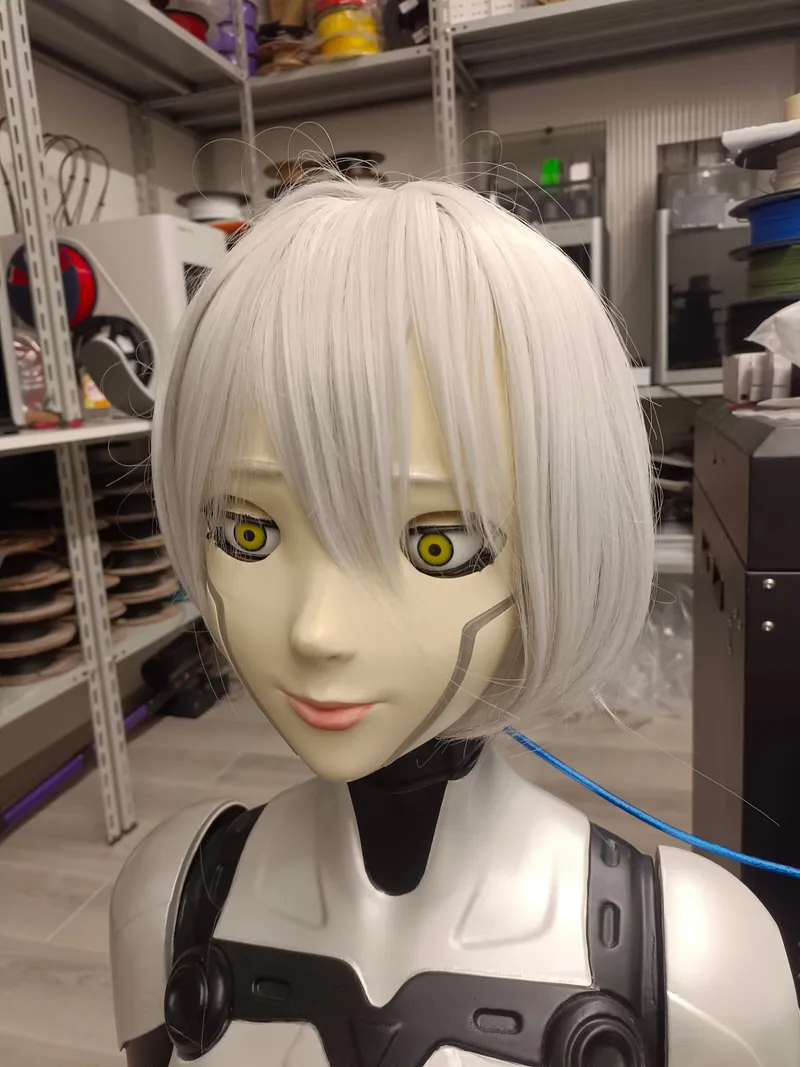
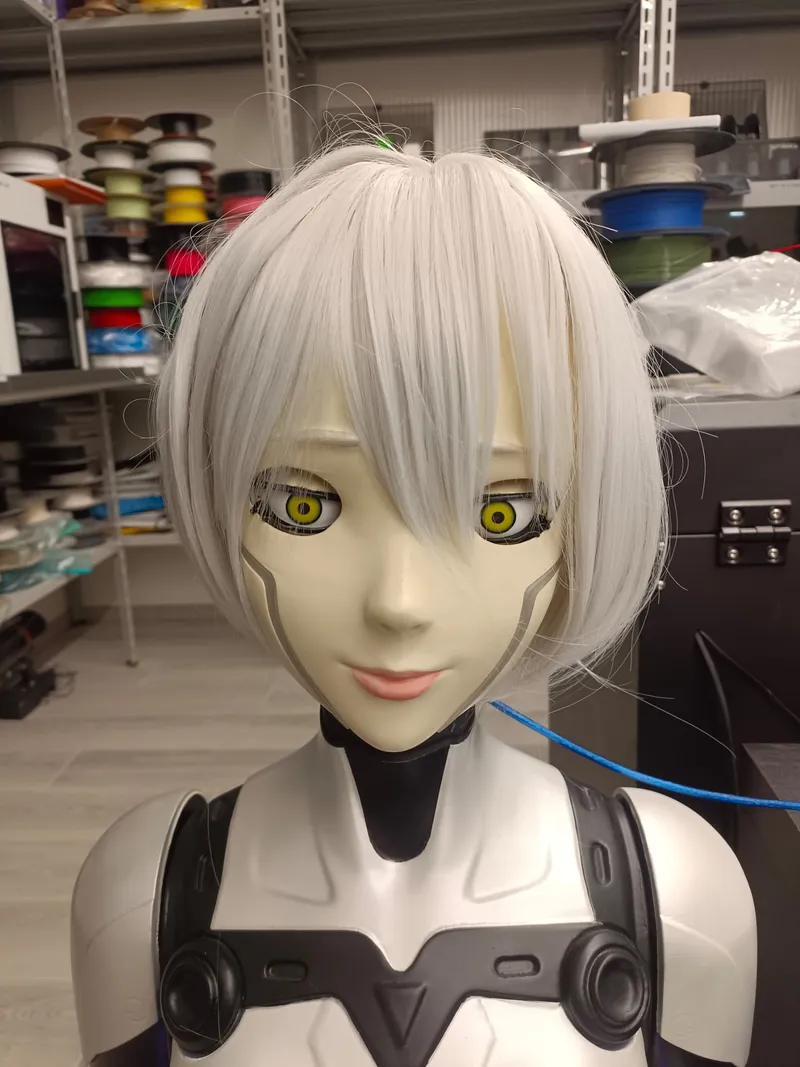
So I decided to conduct a simple experiment: replacing the rigid 3D-printed hair with a lightweight synthetic wig.
The results were surprisingly significant.
⚙️ A dramatic reduction in weight
The experimental wig weighs less than 200 grams.
This represents a weight reduction of approximately 80% or more, removing over 800 grams from the moving head assembly.
The difference in mechanical behavior was immediately noticeable.
The neck motors operated with considerably less effort, making head movements easier to perform.
But the most interesting discovery was something I hadn't fully anticipated.
✨ A new dimension of expressiveness
Unlike rigid resin hair, the synthetic fibers respond naturally to movement.
When Lumina turns her head, her hair follows with a slight delay.
When she stops, individual strands continue moving briefly before settling into place.
This subtle physical behavior introduces what animators call secondary motion.
And remarkably, it happens entirely naturally.
No additional motors.
No extra sensors.
No complex programming.
Just the interaction between movement, gravity, inertia, and flexible materials.
The result is a noticeably more lifelike appearance.
🔬 Engineering before aesthetics
This experiment was primarily intended to evaluate mechanical performance, rather than establish Lumina's final hairstyle.
The wig still requires styling and refinement to match her original design.
Nevertheless, the results demonstrate how selecting a different material can significantly improve both mechanical efficiency and perceived expressiveness.
For a project built largely around additive manufacturing, this was also an important reminder:
Good engineering is not about 3D printing everything. It is about choosing the right technology and material for each function.
❤️ Lumina continues to evolve
Lumina began as a fictional character in Beyond Protocol 404.
Today, every experiment brings her one step closer to becoming a physical character capable of expressing herself through movement.
Sometimes, making something feel more alive doesn't require adding complexity.
Sometimes, it simply requires giving it the freedom to move.
- CC
 Cristian Carlone21 days ago
Che disanima significativa! Davvero coinvolgente e profonda, a mio parere che va oltre all’aspetto ingegneristico o solamente estetico. Ha un valore filosofico, che può traslare nel mondo reale e la nostra quotidianità. Bellissimo concetto, bellissimo progetto!
- DG
 Daniele Guerrini21 days ago
Replying to Cristian Carlone
@cristiancarlone Grazie di cuore Cristiano!!! Oggi ho fatto un up grade che ancora non ci credo quando la guardo... In pratica le ho dato un cervello (AI) mi può sentire e mi risponde con la voce, la SUA voce!!! Era una voce che avevo trovato per doppiare il cartone animato... Devo ancora sistemare alcuni bugs, ma oggi posso dire che ha preso VITA!
- MF
 Micro Front 17221 days ago
WOW!