Dutch Dave Model Bench
@dutchdavemodelbench
110
Following
80
Followers
25
Updates
411
Likes
70
Comments
0
Votes
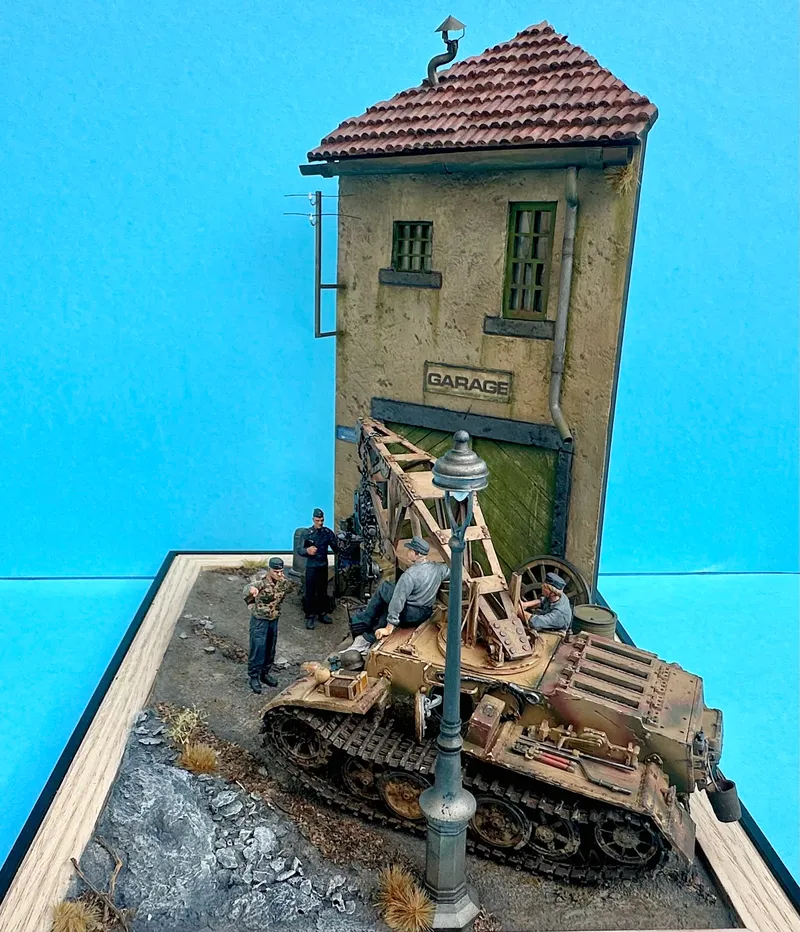
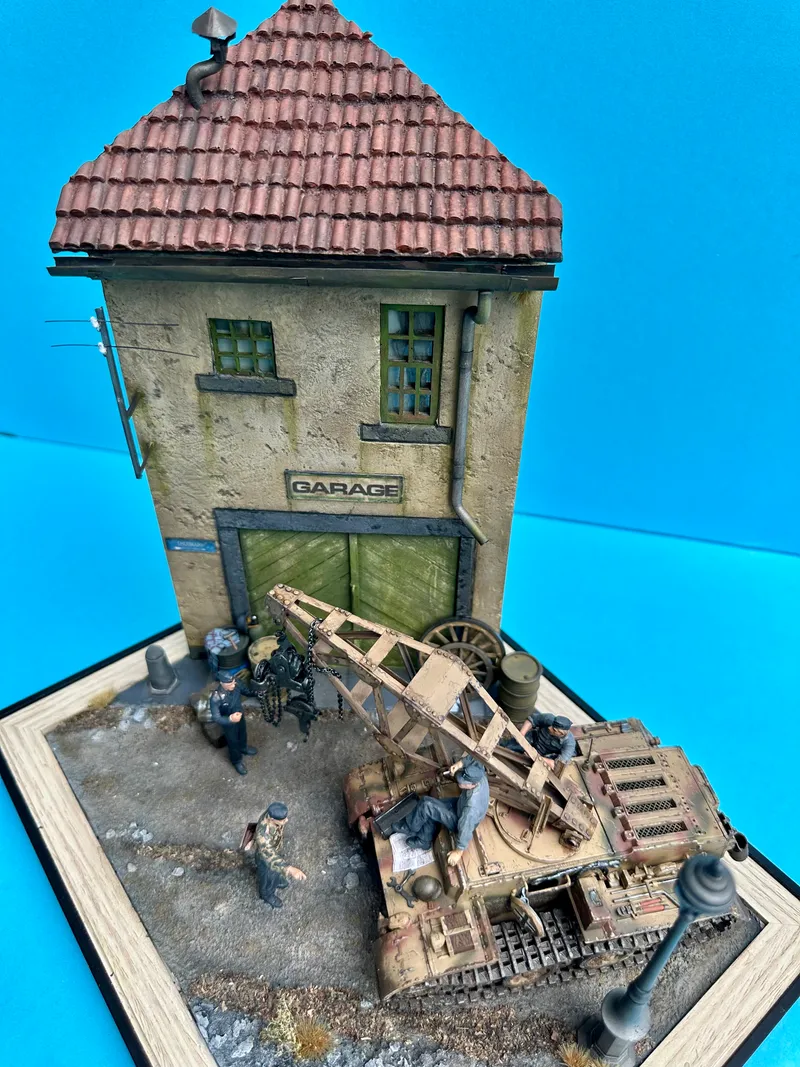
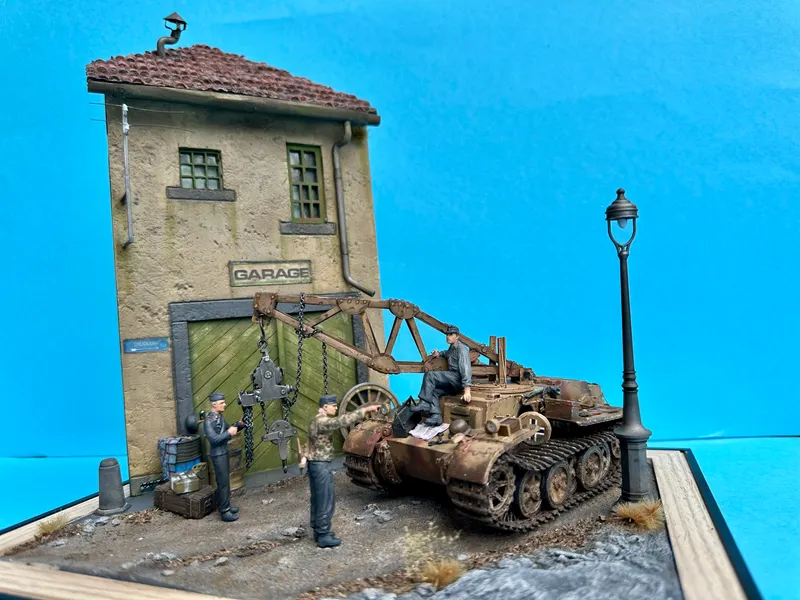
41 days ago
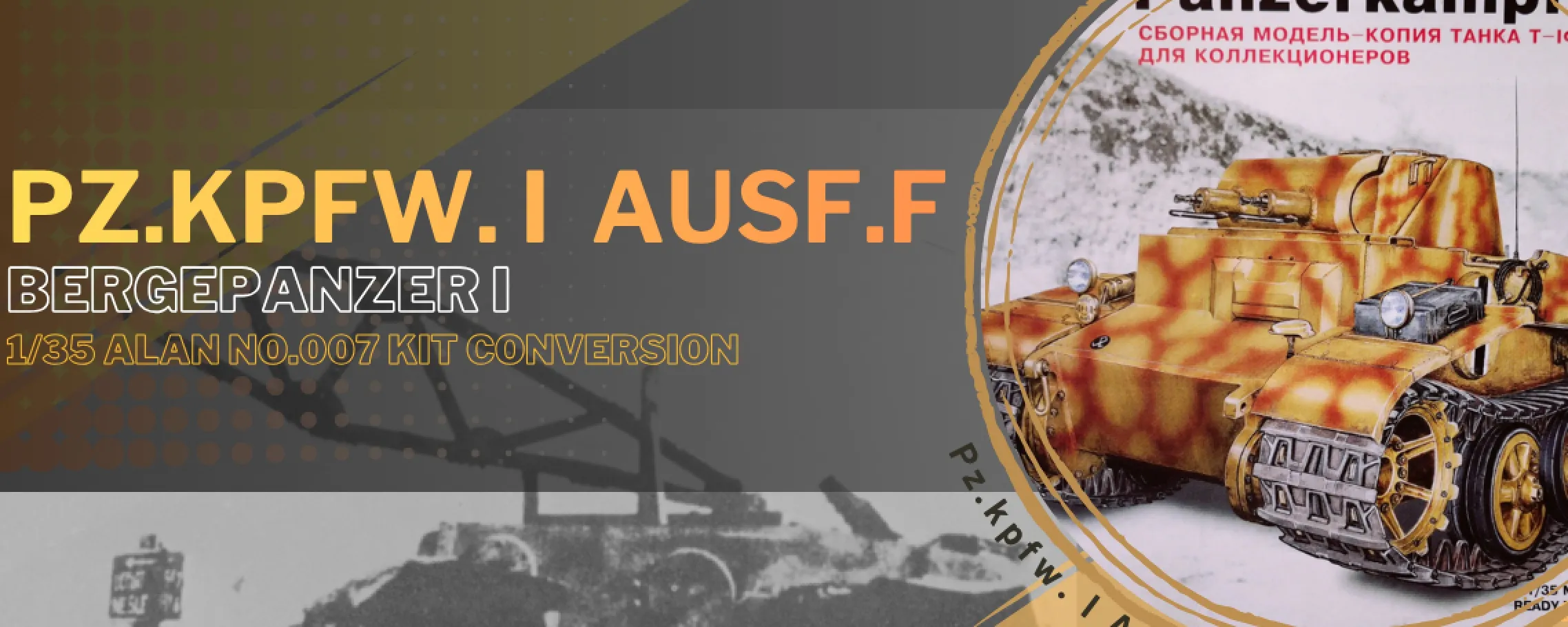
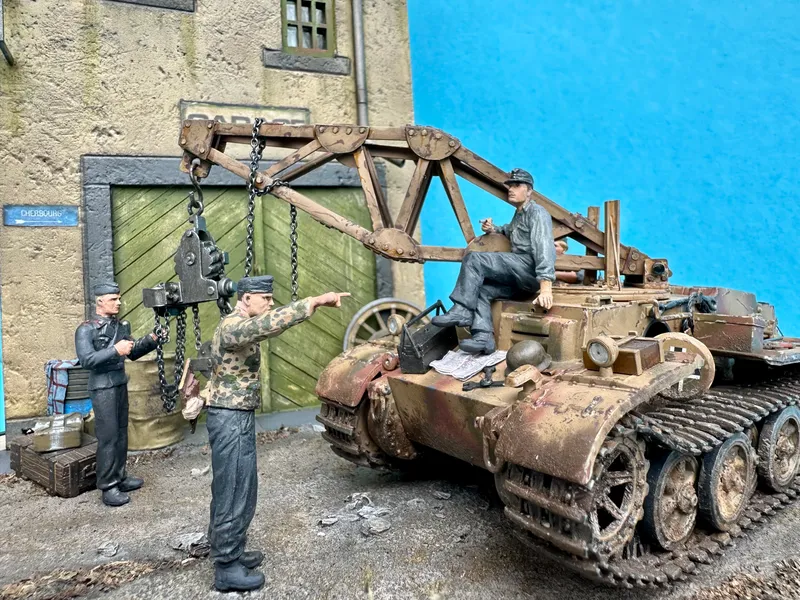
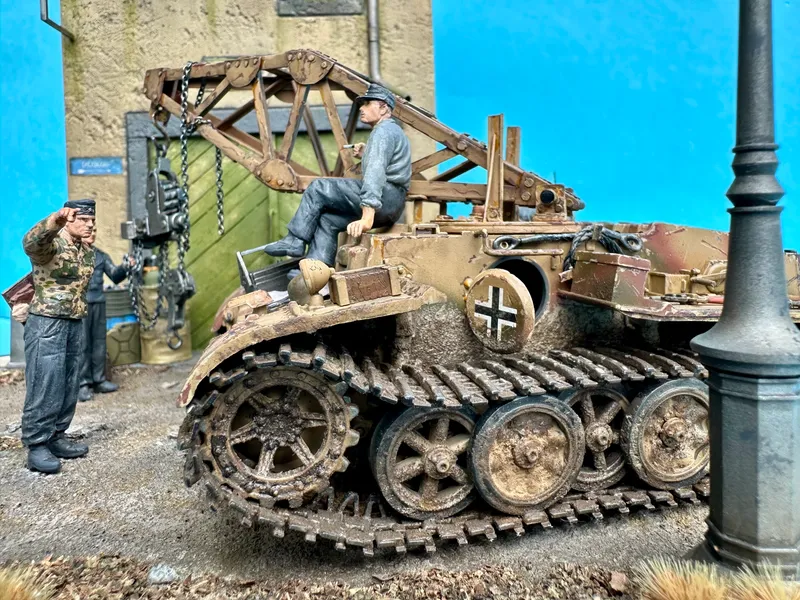
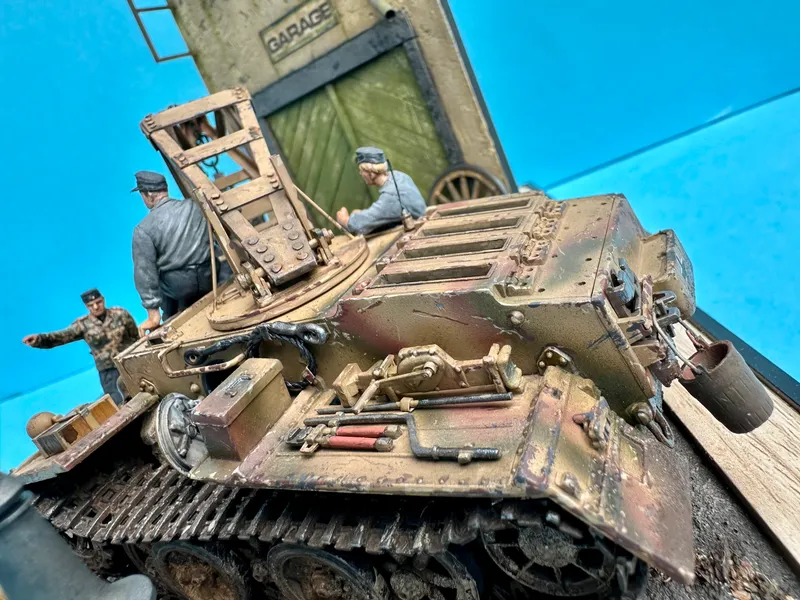
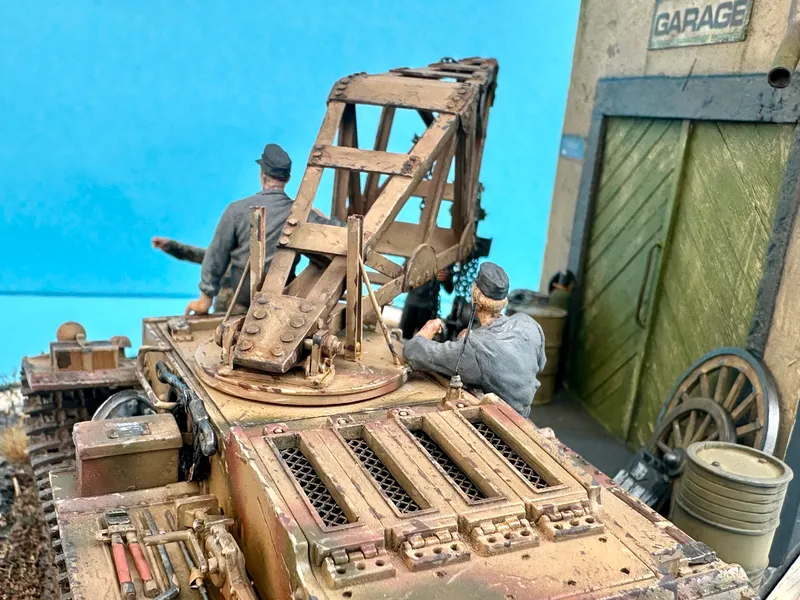
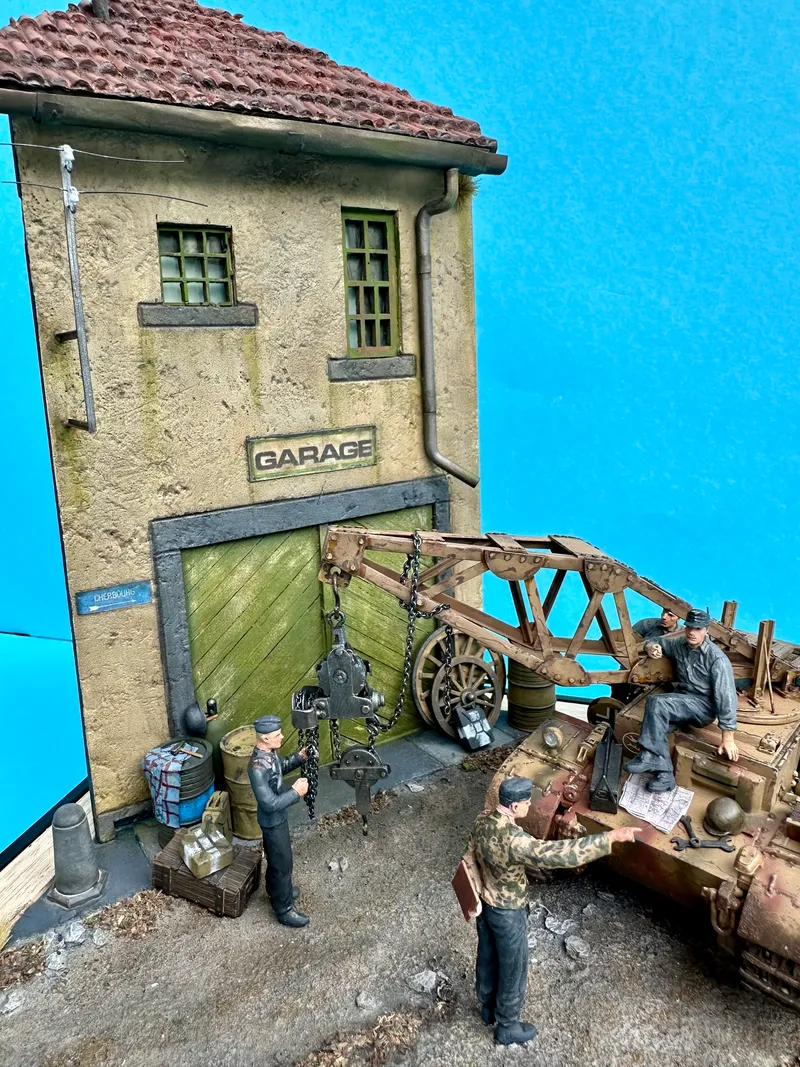
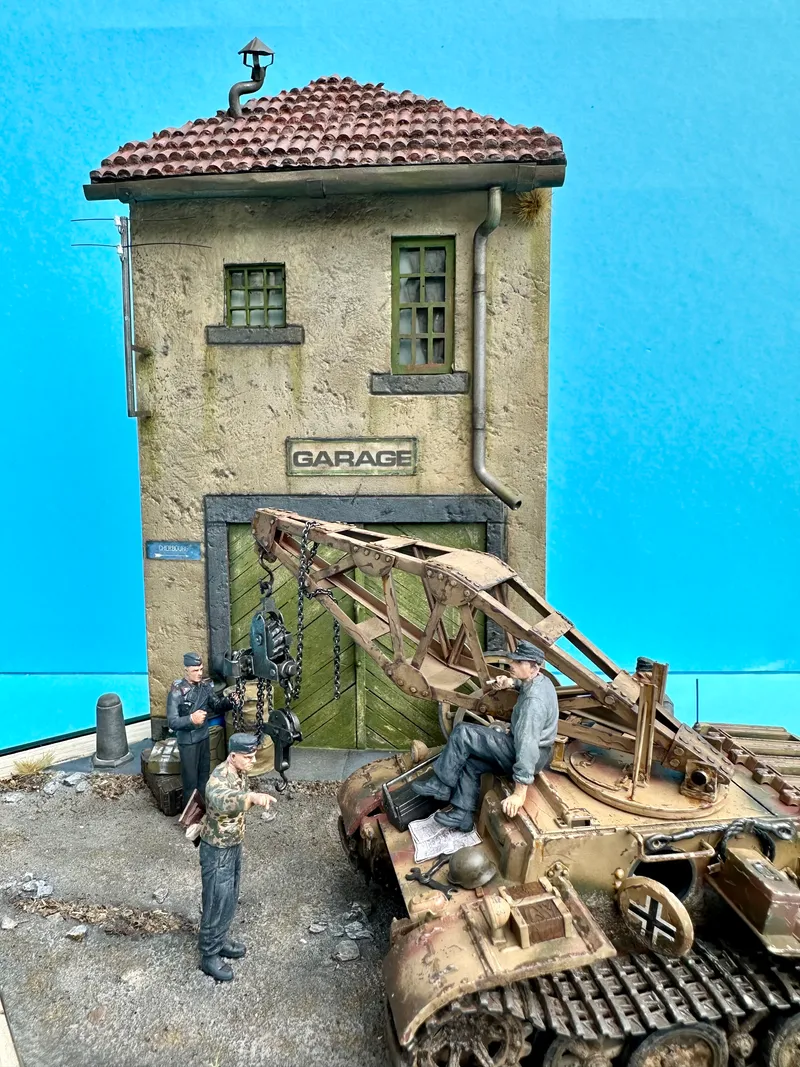
Final Submission GWCC 2026 - From Panzer I Ausf. F. to Bergepanzer I
I entered Gaahleri's GWCC with a project that had been rattling around in my head for a while: taking the humble 1/35 Panzer I Ausf. F and turning it into a rare Bergepanzer I — an early-war panzer converted to a recovery vehicle.
The Base
The build started from Alan's 1/35 kit of the Panzer I Ausf. F. The Ausf. F is already an oddball in the Panzer I family — thicker armor, no turret-mounted main gun in some variants, more of a heavy scout than a proper tank — which made it a fitting donor vehicle. Historically, chassis like this got repurposed for all sorts of support roles once they were judged obsolete for frontline combat, and a recovery vehicle conversion felt like a great opportunity to show how the Wehrmacht actually improvised.
Scratch-Building the Crane and Hoist
The centerpiece of the conversion — and the part I spent the most time on — was the crane and hoist assembly mounted where the turret would normally sit.
I built the crane arm and support framework out of styrene angle stock, which gave me the rigid, slightly industrial look a working boom needs without it feeling flimsy or toy-like.
The angle profile also made it much easier to fake the riveted, bolted-together construction that real field-improvised recovery gear tends to have.
For the smaller mechanical details — pulley housings, mounting brackets, and the bits that make a crane look like it actually does something rather than just standing there — I raided the spares box. A recovery vehicle is a great excuse to use up all those oddly-shaped leftover parts that never seem to fit anywhere else; a lot of what looks like "real" hardware on this build is actually a mash-up of parts never meant to go together.
The hoist cable was scale chain, which reads far better than thread or wire at this scale once it's weathered — you get actual link definition and a sense of load-bearing weight hanging off the boom.
Getting the crane to actually look functional — rather than just present — took a few passes. I paid particular attention to how the boom's angle, the position of the hoist, and the slack (or tautness) of the chain would read together, since that's what sells the illusion of a machine rather than a static model with a stick glued to it.
The Reference Problem
The real challenge on this build wasn't just the building — it was the not-knowing. Actual reference for the Bergepanzer I is thin on the ground: I had just three historic photos and a handful of blueprints to work from, and none of the 3 photos gave me a full, unambiguous picture of the crane's proportions.
That left scaling as the trickiest part of the whole project. With so little to cross-reference, I had to make constant judgment calls — using the hull and known Panzer I dimensions as an anchor, comparing what little was visible across the three photos, and extrapolating the rest from how a boom and hoist of that era would need to be proportioned to actually lift something. It's the kind of problem where you can't just measure and scale up; you have to build a hypothesis and stress-test it against every scrap of evidence you've got, then commit once it feels structurally and visually right.
Wrapping Up
The finished piece sits somewhere between "what the Wehrmacht might plausibly have cobbled together" and "what makes for a good story on the display shelf" — which is exactly the sweet spot I was aiming for with a scratch-built conversion like this. It was a satisfying one to finish, and a good reminder that some of the most rewarding builds start with a bit of a historic mystery.
Thanks everyone that took part in my journey!
Youtube: https://youtu.be/fBN6fNozW0Q
- 5
 585hillbillygarage41 days ago
Awesome build my friend 😍 Good luck 🤙
- DD

- MF
 Micro Front 17241 days ago
Great job !
- DD
- G
 gekoch41 days ago
Great concept with this.
- DD