Dannyelyto
@dannyelyto
7
Following
50
Followers
17
Updates
316
Likes
39
Comments
0
Votes
112 days ago
The Importance of Part Orientation in 3D Printing: A Case Study
Hi everyone! Today I want to share an example that perfectly illustrates why part orientation is critical to the success of a 3D print.
The Case: A Cloak with Chain and Clasps
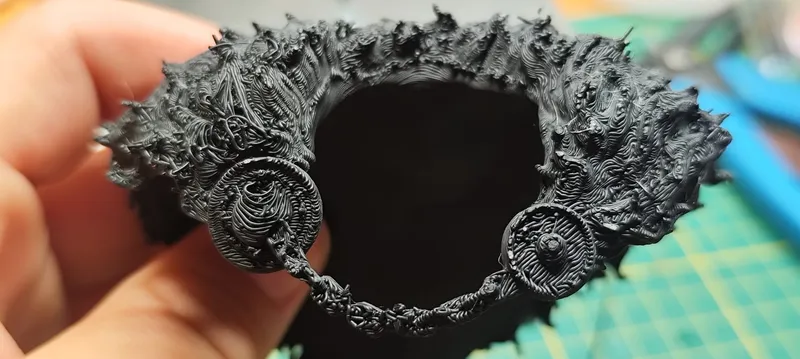
In the attached image, capa.jpeg, you can see a printed piece consisting of a cloak with a chain and side clasps. The orientation of the part during printing was flawed: it was placed so that the chain rested directly on the print bed.
The Consequences:
- Poor Print Quality: As you can see, both the chain and the side clasps ended up very poorly printed. The lack of proper support and material accumulation caused these fine, delicate details to fail.
- Useless Part: The poor state of the chain and clasps makes the entire piece useless. It cannot be used for its intended purpose, resulting in a waste of both time and material.
Why Is Orientation So Important?
Part orientation affects several key aspects of 3D printing:
- Overhangs and Supports: Proper orientation minimizes the need for support structures on visible surfaces and prevents suspended parts from sagging or collapsing.
- Layer Adhesion and Strength: The direction of the layers determines the mechanical strength of the piece. Orienting it correctly ensures it can withstand forces where it needs to.
- Surface Finish: Orientation directly impacts surface quality; areas facing upwards or printed vertically generally look much cleaner than those relying on heavy support material beneath them.
Lessons Learned:
- Pre-Print Planning: Before hitting print, it is essential to analyze the geometry of the part and determine the best orientation to optimize quality and minimize defects.
- Slicer Software Analysis: Use your slicing software to preview the print layer by layer, checking how overhangs and details like the chain will be supported.
- Experience and Trial: Learning how different geometries react to orientation is a matter of practice, but analyzing failures like this one helps us make much better decisions for future projects.
Conclusion:
Part orientation is a fundamental factor in 3D printing. A small change in how you rotate your model on the bed can mean the difference between a perfect print and a failed, useless piece. Don't underestimate the power of orientation—spend those extra few minutes planning your print layout!
Thanks for reading! If you have any questions or want to share your own experiences with orientation fails, feel free to leave a comment below!
- S
 STUDIO93558 days ago
That's a great conclusion :p